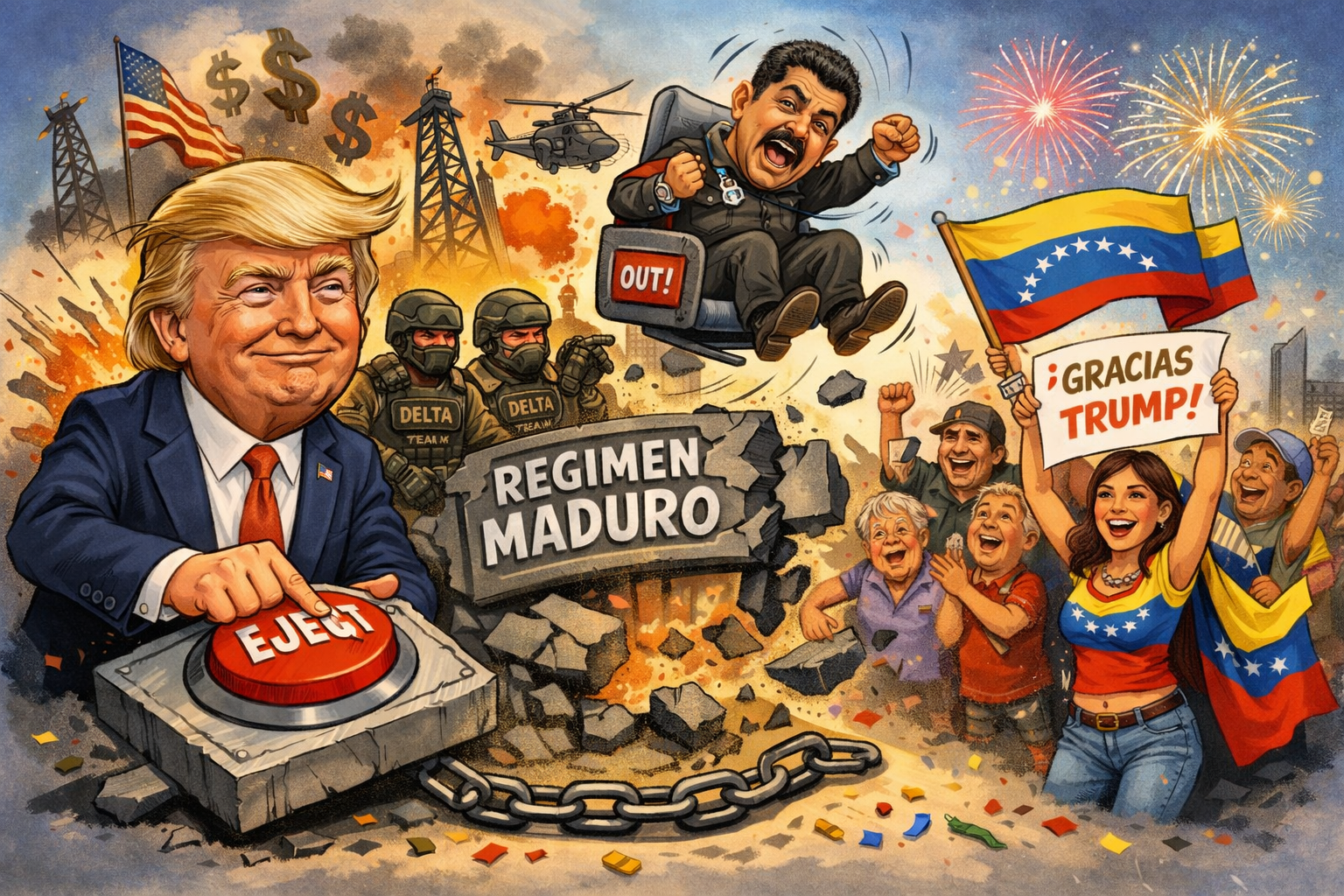
The events in Venezuela in early January 2026 altered the way the United States’ “next targets” are interpreted. The U.S. military operation that culminated in the capture of Nicolás Maduro on 3 January 2026 was immediately followed by hardline rhetorical signals from Trump toward Colombia and Cuba, which then triggered speculation about Greenland. This sequence appears, at first glance, like a list of targets, yet it is more accurately read as a single continuum: the United States secured “outcomes” in the Caribbean—oil, regime change, and maritime routes—while simultaneously reinforcing a defense belt and bargaining power in the North Atlantic and the Arctic. Reuters reported that the Venezuelan government claimed approximately 100 fatalities resulting from the U.S. operation, including Venezuelan military personnel and Cuban personnel present in Venezuela, demonstrating that the Caribbean theater was not merely a site of diplomatic pressure but one of large-scale kinetic operations (Reuters 2026).
The White House’s claim that the United States would control and market Venezuelan oil “without a time limit” underscores that Venezuela was treated as a strategic asset rather than merely a “democratization” mission. International media coverage also reported tanker seizures and emphasized that oil decisions must serve U.S. national interests, meaning that the outcomes of the Venezuelan operation were immediately translated into control over energy flows (Reuters 2026; AP News 2026). From this point, it was understandable that public speculation shifted toward Colombia and Cuba as potential next targets, given their location within the Caribbean perimeter directly linked to migration, narcotics, and political stability near the United States. Al Jazeera quoted Trump as threatening Colombian President Gustavo Petro, stating that “military operations in Colombia sound good,” and asserting that Cuba “looks ready to fall” (Al Jazeera 2026). AP likewise noted that after Maduro’s capture, public speculation and international anxiety turned toward possible U.S. moves against Greenland, Cuba, and Colombia (AP News 2026).
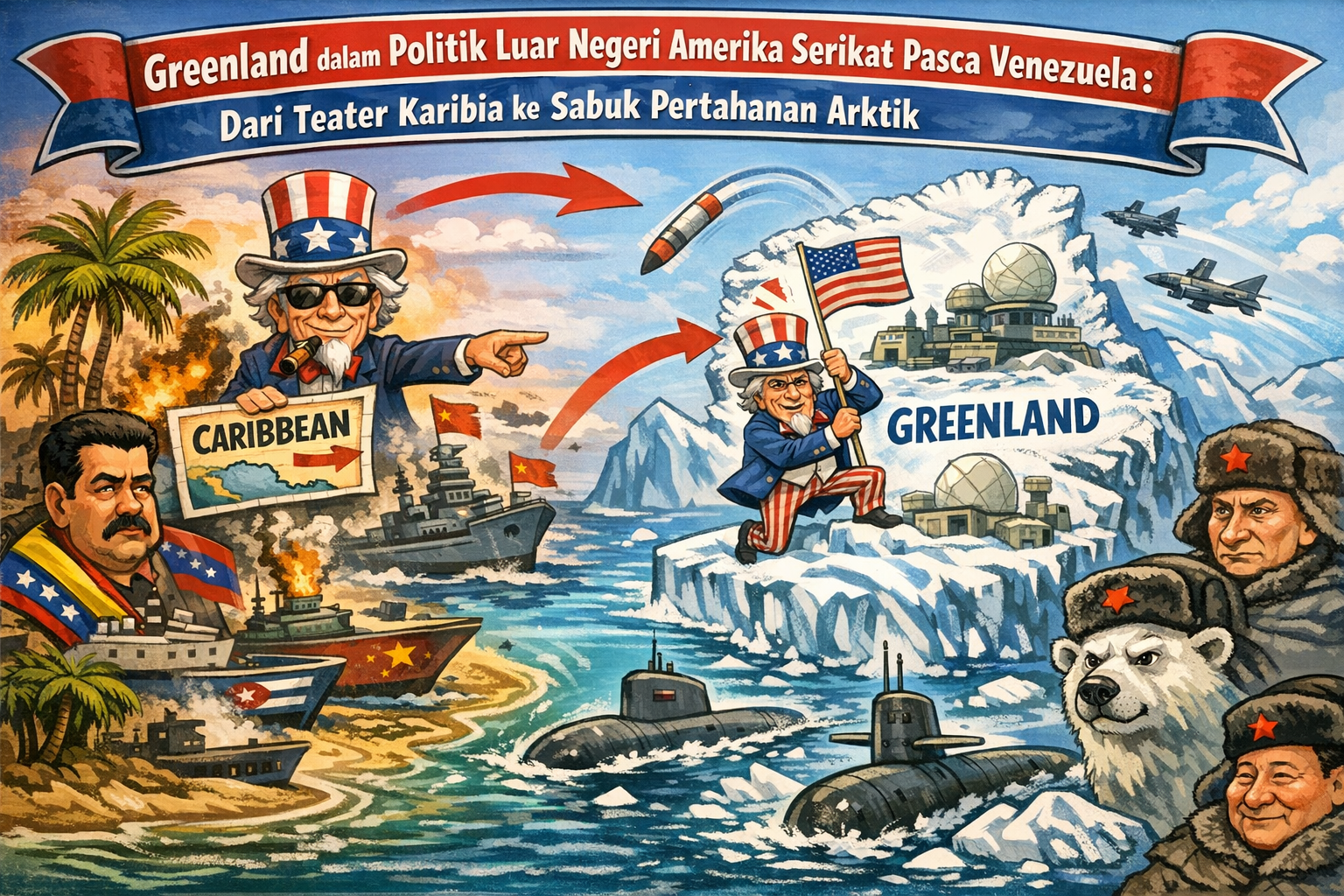
The question, however, is why Greenland should be included in this chain, when Colombia and Cuba appear far more “proximate” and “practical.” The answer lies not in geographic proximity, but in the structure of U.S. global operations. Greenland is a node that connects two needs that became sharply pronounced after Venezuela: first, safeguarding U.S. freedom of maneuver in the Atlantic and the Arctic as escalation in the Caribbean provoked reactions from Russia and, especially, China; and second, securing military and logistical movement corridors between North America and Europe. For this reason, Greenland repeatedly appears not as a “Caribbean target,” but as part of a defense belt that renders Caribbean operations strategically safer (DoD 2024).
The hardest evidence of Greenland’s importance to the United States lies in official defense strategy documents and the functions of existing bases. In the Department of Defense Arctic Strategy 2024, the DoD refers to joint air and maritime patrols with allies in the Arctic “including areas such as the Greenland–Iceland–United Kingdom gap (GIUK gap),” linking them to U.S. and allied defense interests as well as NATO mission support (DoD 2024). The GIUK gap is not merely an academic term, but a maritime and air corridor that has historically determined whether Russian naval forces can penetrate the North Atlantic. Strategic assessments by the International Institute for Strategic Studies likewise emphasize the significance of the GIUK gap for regional strategic stability (IISS 2023). Even British Arctic policy documents acknowledge the GIUK gap as a shared security interest of the United Kingdom and the Kingdom of Denmark, noting an increased military focus on the area, which indicates that from the perspective of NATO allies as well, Greenland is treated as a concrete defense point (UK MOD 2023).
Situated atop this GIUK gap is Pituffik Space Base (formerly Thule), which gives Greenland a unique weight in U.S. foreign policy because it directly relates to homeland defense. The U.S. Space Force explains that space warning squadrons operate the Upgraded Early Warning Radar (UEWR) at Pituffik as part of the ballistic missile early warning network supporting national command authorities and NORAD (U.S. Space Force 2025). AP has reported on Pituffik’s role in missile warning, missile defense, and space surveillance for the United States and NATO, as well as the fact that it is the northernmost Department of Defense installation (AP News 2025).
What renders the linkage between Venezuela and Greenland even more operational is the fact that the United States has not merely maintained Pituffik, but has modernized and secured its long-term sustainability. Serco announced a contract worth approximately $323 million over four years for repairs and upgrades to backup power generation at Pituffik, explicitly stating that the base supports missile warning, missile defense, and space surveillance missions (Serco 2024). From a predictive standpoint, the contract’s value and scope matter more than opinion: they indicate a multi-year investment designed to ensure continuous base functionality in an extreme environment.
Beyond the military dimension, there is a more subtle yet highly specific policy trail: direct diplomacy and the production of mineral knowledge. On 6 June 2019, a joint statement was issued regarding a U.S.–Greenland memorandum of understanding and the implementation of hyperspectral surveys framing cooperation in mineral sector governance and mapping (U.S. Department of State 2019). The USGS explained that the 2019 hyperspectral survey was conducted by Greenland’s mineral authorities with support from the U.S. Department of State, involving airborne sensors to enhance geological and mineralogical knowledge of the region (USGS 2020). The Government of Greenland itself published information on the processing of hyperspectral data to produce mineral maps in southern Greenland (Government of Greenland 2021). Only after this did the U.S. Department of State announce, on 10 June 2020, the reopening of the U.S. Consulate in Nuuk as a demonstration of American commitment to Greenland and Denmark (U.S. Department of State 2020). The reopening of the consulate constituted an operational signal, as it established daily capacity to influence local elites, manage programs, and secure negotiation channels.
Why, then, must Colombia and Cuba remain in this article—not as competitors to Greenland, but as elements that reinforce the argument for Greenland’s importance? Because Colombia and Cuba illuminate the logic of the “near theater” after Venezuela, while Greenland explains the logic of the “buffer theater” that allows the near theater to function without undermining the United States’ global position. Trump’s threats toward Colombia and Cuba were delivered in language suggesting readiness for escalation, creating the impression that they were “more strategic” (Al Jazeera 2026; AP News 2026). Yet at the same time, Greenland emerged in discourse as part of the “what comes next,” eliciting allied responses and European attention—reactions that typically do not occur if an issue is merely diversionary or domestically oriented (Reuters 2026).
From the standpoint of predictive methodology for this article, the most productive relationship is as follows: Venezuela represents a “demonstration of capability” and “acquisition of outcomes” (energy and policy control); Colombia and Cuba represent “regional disciplinary projection” (coercion within the Caribbean perimeter); and Greenland represents “structural lock-in” (the GIUK gap, UEWR radar, and Pituffik base providing early warning and space-domain capabilities). The available evidence does not require the conclusion that the United States will annex Greenland. It is, however, sufficient to state—concisely and measurably—that Greenland has already become a permanent component of U.S. foreign policy: codified in DoD strategy, operated by the Space Force for missile early warning, modernized through contracts worth hundreds of millions of dollars, and reinforced through consular diplomacy and mineral-mapping programs.
The strengthening of Greenland’s position in U.S. foreign policy became even clearer when post-Venezuela escalation was not confined to the Caribbean, but rapidly activated the United Kingdom as an operational node in the North Atlantic. The United Kingdom did not function as a normative ally, but rather as the “hand” of the GIUK gap architecture, enabling what is observed in Greenland to be operationalized. Reuters reported that on 7 January 2026 the British government provided pre-planned operational support for U.S. actions in the seizure of a Russian-flagged tanker in the North Atlantic, including RAF surveillance and support from British naval assets, after the United States had tracked the vessel for more than two weeks prior to the action (Reuters 2026). The Guardian confirmed that the United Kingdom authorized the use of its military bases by U.S. aircraft, providing aerial surveillance and maritime logistical support, though without direct involvement of British troops in the boarding action (The Guardian 2026).
This sequence is significant because it demonstrates that control of the North Atlantic was not conducted ad hoc, but through a division of functions: sensors, early warning, and strategic monitoring centered on Greenland, while execution and enforcement occurred within the United Kingdom’s operational space. This indication is reinforced by reporting from Forces News on the presence of U.S. special operations assets at British bases, including the appearance of an AC-130J Ghostrider at RAF Mildenhall and the arrival of C-17 transport aircraft commonly used to deploy special operations forces (Forces News 2026). Analysis by The War Zone, based on open-source tracking data, recorded a surge in U.S. special operations aircraft and platform movements toward the United Kingdom—a doctrinal combination typically employed for maritime interdiction, boarding operations, and rapid contingencies (The War Zone 2026).
Within this configuration, Greenland functions as the “eye,” providing strategic depth of vision through radar, space surveillance, and control of the GIUK gap, while the United Kingdom functions as the “hand,” enabling the United States to act without politically exposing Greenland. This relationship explains why the deployment of special operations forces to the United Kingdom is irrelevant to Colombia or Cuba, yet logical—and indeed necessary—within the framework of securing Greenland and the North Atlantic in the aftermath of the Venezuelan escalation.