

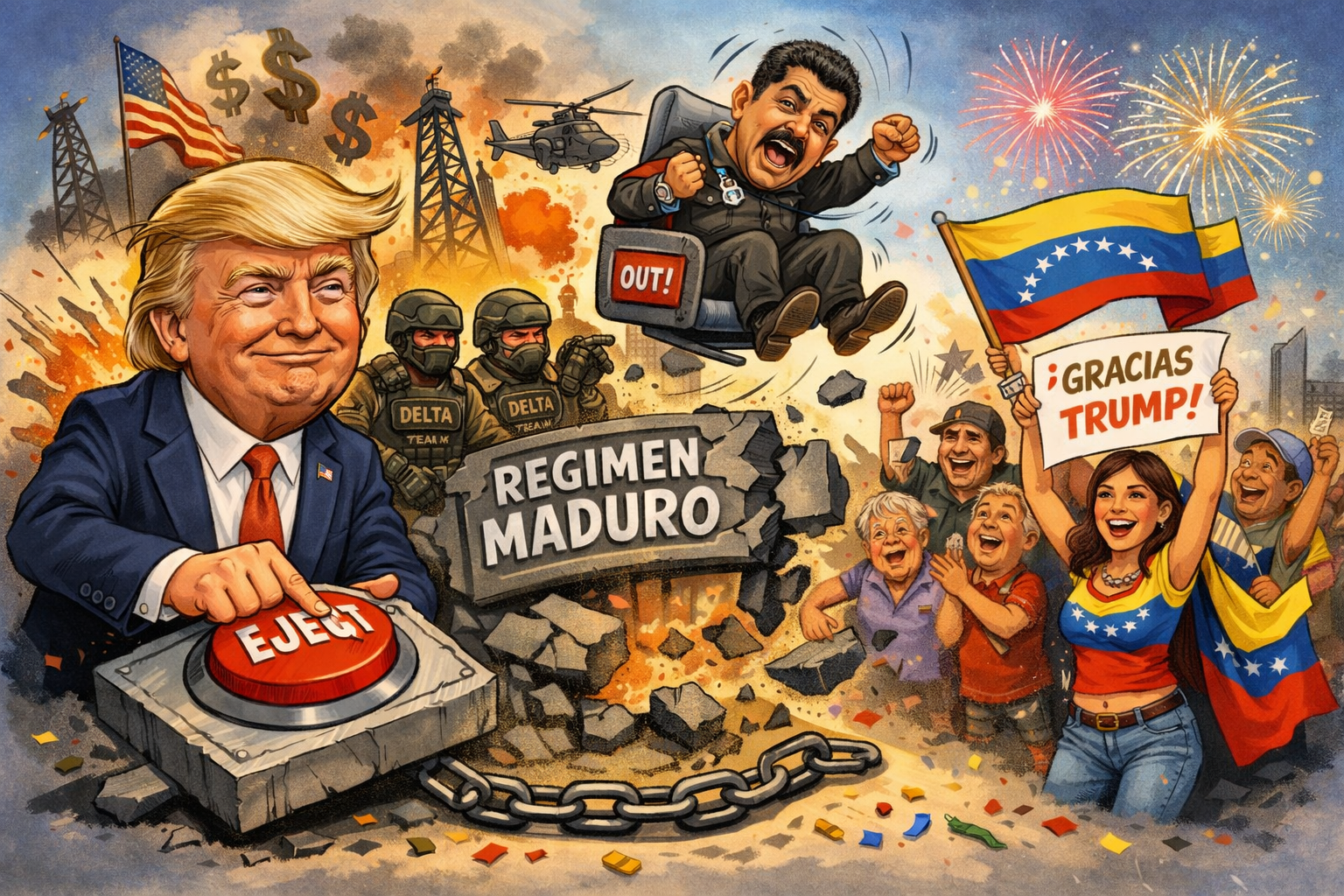
In the global debate on Venezuela, actions taken by the United States under the leadership of Donald Trump are often reduced to questions of oil interests and classic geopolitical calculations. This reduction, as criticized by Francisco Rodríguez, oversimplifies the Venezuelan crisis by ignoring the fact that the country’s collapse is rooted in economic policy failures, institutional erosion, and the consolidation of power that closed off internal mechanisms of correction (Rodríguez 2018). As a result, analyses that focus solely on external motives lose their explanatory power regarding how these actions are interpreted by Venezuelan society as the primary subject of the crisis.
Demographically, the scale of Venezuela’s crisis is evident in the composition of its population at home and abroad. By 2025, Venezuela’s population was estimated at approximately 28.5 million, while nearly 7.7 million citizens were living as refugees and migrants outside the country (UNHCR 2025; Worldometer 2025). Michael Penfold emphasizes that migration on this scale is an indicator of a collapsed social contract, as citizens choose exit when the state is no longer able to guarantee basic economic and political security (Penfold 2020). With nearly one in four citizens living abroad, Venezuela’s crisis is structural in nature and strikes at the foundations of the state.
This collapse was further exacerbated by economic disintegration. The hyperinflation episode of 2018, which exceeded one million percent, destroyed purchasing power and effectively eliminated the function of money in everyday life (IMF 2019). Ricardo Hausmann, together with Rodríguez, interprets this condition as a symptom of the breakdown of economic governance and state capacity, rather than merely a technical monetary failure (Hausmann and Rodríguez 2014). The consequences were directly reflected in basic welfare indicators. The ENCOVI survey recorded that more than 70 percent of households experienced food insecurity, while Luis Pedro España emphasized that the crisis was chronic and cut across social classes (ENCOVI 2022; España 2022). The World Food Programme estimated that approximately 40 percent of the population faced moderate to severe food insecurity (WFP 2025). Susana Raffalli warned that chronic malnutrition would leave intergenerational effects even if economic recovery were to occur (Raffalli 2020). In the health sector, Paul Spiegel classified Venezuela’s situation as a complex humanitarian emergency, a condition commonly found in armed-conflict zones, even though the country was not formally at war (Spiegel et al. 2019; PAHO 2021).
This framework of structural crisis formed the backdrop against which the United States executed law-enforcement and security actions against Nicolás Maduro on charges of narco-terrorism and transnational drug-trafficking conspiracy, charges that were developed beginning in 2020 and expanded in late 2025 (US DOJ 2020; US DOJ 2025). In public discourse, this operation has frequently been associated with the involvement of U.S. special operations units under Joint Special Operations Command, particularly Delta Force and SEAL Team 6. From an academic standpoint, the mention of these units is not intended to confirm classified operational details, but rather to assess the capacity of the U.S. state to conduct high-precision interventions against targets perceived as strategic threats within the framework of counter–narco-terrorism (Feickert 2023; Cronin 2020).
Delta Force and SEAL Team 6 are classified as special mission units with highly selective mandates. Security literature indicates that Delta Force excels in cross-domain flexibility, silent infiltration, and deep integration with strategic intelligence networks, while SEAL Team 6 is known for its specialization in maritime operations, urban raids, and the capture of high-value targets in counterterrorism and transnational crime contexts (Urban 2015; Naylor 2015). In international security studies, this combination of capabilities is understood as an instrument through which the state penetrates zones of impunity—spaces of power long perceived as immune by state and non-state actors alike (Cronin 2019). This superiority is both tactical and symbolic, as it signifies the deployment of the highest capacities of a superpower.
This symbolic effect resonated strongly at the level of Venezuelan society and the diaspora. Domestically, media reports and visual documentation showed spontaneous celebrations in major cities such as Caracas and Maracaibo, with citizens taking to the streets, waving national flags, honking car horns, and holding nighttime street festivities (Reuters 2026; AP 2026). Abroad, similar responses emerged in major diaspora hubs. Venezuelan communities numbering more than 2.8 million in Colombia, around 860,000 in Peru, approximately 370,000 each in Chile and Ecuador, over 250,000 in Brazil, and hundreds of thousands more in the United States and Spain expressed public celebration and solidarity. In Doral, Florida—often referred to as “Doralzuela”—street parties and symbolic demonstrations framed the event as a political turning point (Financial Times 2026).
What is analytically important to emphasize is that these responses did not stop at relief, but developed into acceptance and expressions of gratitude toward Trump for the overthrow of the Maduro regime. Within Venezuela, segments of the population linked the regime’s collapse to Washington’s consistent pressure, leading Trump to be perceived as an actor who directly contributed to opening the possibility of a new life (Reuters 2026; AP 2026). In the diaspora, these expressions were even more articulate. María Fernanda Rivas, a member of the Florida-based diaspora, stated that Trump’s actions “broke the fear long imposed by the state and restored hope for justice” (Financial Times 2026). In Bogotá, Carlos Méndez described the removal of Maduro as transforming Venezuela’s suffering from a domestic crisis into a matter of international justice (Reuters 2026). These statements indicate a shift in public perception from geopolitics toward symbolic justice.
Theoretically, Javier Corrales explains that in consolidated authoritarian regimes, the leader functions as a symbol concentrating state failure. When that symbol collapses through mechanisms associated with the highest capacities of external power, society often responds with collective psychological release even before policy change is institutionalized (Corrales 2023). This framework aligns with the analysis of Steven Levitsky and Lucan Way, who categorize Venezuela as a case of blocked transition, in which internal change is obstructed, allowing external shocks to function as an initial trigger for political transition (Levitsky and Way 2020).
In conclusion, it must be reiterated that even though U.S. actions toward Venezuela cannot be entirely separated from strategic calculations and potential resource motives, these dimensions do not in themselves negate the social meaning of the events that occurred. In international political analysis, state motives are often multiple and overlapping, yet the most concrete measure of an action’s significance lies in its impact on the lives of the directly affected population. In the Venezuelan case, the fact that the people—both domestically and within the diaspora—responded to the fall of the regime with relief, celebration, and collective happiness demonstrates that the event was interpreted as liberation from prolonged structural suffering. Thus, beyond debates over oil interests or geopolitical strategy, there exists a social reality that cannot be ignored: the happiness of the Venezuelan people stands as the most honest indicator that this change was perceived as the end of a regime of oppression and the beginning of the possibility of a more dignified life.


The article compellingly argues that the actual outcomes of U.S. policy toward Venezuela often diverge from its stated intentions. It highlights how strategic interest especially control over resources and geopolitical influence have shaped social responses in both countries, raising critical questions about sovereignty, human impact, and the ethical limits of foreign intervention. This shows that consequences, not declared motives, frequently define how policies are perceived and experienced.
I think this article wisely emphasizes that, above political and oil interests, human dignity is the top priority. The author demonstrates that for oppressed people, external intervention is not seen as a violation of sovereignty, but rather as a hope for justice. In short, the validity of a political action is most honestly measured by the sense of security and happiness of the people directly affected.
We can see a big gratitude from Venezuelans that reflects their desperation rather than a democratic consolidation. But removing a leader does not automatically rebuild state capacity, social trust, nor autonomous political agency sustainably.
This article helps readers understand that the U.S. policy toward Venezuela affects ordinary people, not just the government. It shows how sanctions and political pressure worsen daily life. However, the article could explain more about the role of Venezuela’s leaders in the crisis.
I think ,This article shifts focus from the motives behind U.S. policy toward Venezuela under Trump to its real-world impacts. While debates often center on strategic or political intentions, the piece highlights how measures like sanctions affected daily life, access to essentials, and community dynamics in Venezuela. Importantly, it shows societies aren’t passive they adapt, build support networks, and shape their own responses to external pressures. Judging policies by consequences rather than just stated goals gives us a more grounded understanding of how global politics touches people’s lives and influences social resilience.
From this article, we can see that public gratitude seems to reflect collective emotional relief after the fall of an oppressive regime. It seems drivem less by genuine ideollogical support and more by momentary release, rather than full approval of external intervention or its broader long-term geopolitical implications.
The article persuasively foregrounds social perception as an analytical lens, yet it risks conflating popular celebration with societal consensus. The voices highlighted—particularly urban residents and diaspora communities—may not fully capture rural, marginalized, or politically ambivalent groups whose experiences of regime change can diverge sharply. Moreover, attributing symbolic justice primarily to U.S. action underplays the agency of Venezuelan civil society and opposition actors who sustained resistance under severe repression. A more critical balance between external shock and internal struggle would strengthen the explanatory depth of the argument.
The article astutely prioritizes Venezuela’s structural collapse hyperinflation, migration, malnutrition over U.S. oil motives, highlighting societal celebrations post-Maduro’s fall as proof of perceived liberation. Critically, it underplays Maduro’s narco-terrorism charges’ validity, risking oversimplification of Trump’s intervention as purely symbolic justice.
This article convincingly argues that the Venezuelan crisis cannot be understood solely through U.S. geopolitical or resource based interests, but must be situated within long-term structural failures of governance, economy, and institutions. However, I would argue that popular celebrations and gratitude toward external actors, while socially meaningful, should not be overstated as evidence of durable political legitimacy. Without a clear post-regime transition framework, institutional rebuilding, and domestic political ownership, the risk remains that external intervention addresses symptoms rather than resolving the structural roots of Venezuela’s crisis.
Venezuela’s collapse was not caused by external influence, but by a failed economy marked by mass starvation and hyperinflation that forced 7.7 million people to flee. Under Trump’s leadership, the U.S. deployed elite forces to pressure Maduro. Many debate that ‘the U.S. only wants oil,’ but for the Venezuelan people, that doesn’t matter. What matters to them is feeling free and having hope for life again. America may have had political or economic interests, but for those who have been starving and oppressed for years, the most important thing is the result: they are free from a regime that tortured them. The happiness of the Venezuelan people is the most honest indicator that this change was what they truly desired.
In my view, the article successfully highlights how societal reactions in Venezuela challenge purely motive-based interpretations of U.S. foreign policy. However, I remain critical of equating public celebration with political legitimacy, as emotional relief does not necessarily ensure durable institutional reform. From an international relations perspective, this raises concerns about whether external intervention can genuinely foster long-term stability without reinforcing asymmetrical power relations and weakening multilateral norms.
This article accurately shows that Trump’s actions received positive responses from segments of Venezuelan society that had endured prolonged structural suffering. However, such responses cannot serve as normative justification, as external intervention continues to raise issues of sovereignty and international law, while also risking the undermining of long-term democratic processes and the consolidation of institutions that should be led by domestic actors themselves.
We can see that Venezuela’s crisis came mainly from internal failures like bad economic policy, authoritarianism, broken institutions, etc. This led to millions fleeing the country, inflation, and the collapse of food and health systems. Hence why the U.S/Trump’s actions shouldn’t be seen only as ‘oil politics’ or geopolitics as to Venezuelans, those actions helped end a regime that had caused massive economic collapse, hunger, migration, and suffering. People celebrated, not resisted, and many openly expressed relief. Even if the U.S had strategic motives, the most important pointis how Venezuelans themselves interpreted and digest what happened. Their widespread happiness suggests that, infact meaning is shaped by lived experience, not just state motives.
In my opinion,the colaps in Venezuela causes from internal failures not the influence from external.It means the politic in that country doesn’t really work great,and thats make the economy bad.
From this arcticle The text effectively pivots the Venezuelan crisis analysis from purely geopolitical motives to its profound social and structural impact, highlighted by the massive refugee flow and economic collapse. The critical insight lies in the population’s celebratory response, interpreting the external high-precision intervention not as foreign meddling, but as a symbolic act of liberation and justice against a system of chronic oppression, confirming the Corrales and Levitsky/Way theoretical frameworks regarding blocked transitions.
The article offers an important critique of how international power operates by revealing the gap between foreign policy decisions and their social consequences. In the Venezuelan case, it shows that external pressure does not act in a vacuum, but interacts with domestic inequality, public trust, and political fatigue. This analysis is useful for international relations because it questions whether interventionist policies can ever be ethically justified when they deepen social vulnerability rather than resolve structural problems.
This article presents a strong argument by highlighting social effects as the main perspective in this analysis, rather than only considering the geopolitical motivations of the United States. However, it should be noted that public enthusiasm and views on liberation do not automatically guarantee a transition to sustainable democracy. The review would be more balanced if it also examined the possibility of dependence on outside intervention, the potential for a power vacuum, and the possibility of new turmoil after the regime collapses, to the extent that the people’s joy is not considered as it should be, but rather as a fragile early phase in the nation’s recovery.
From the article, we’re given a new perspective towards the case. As the article more focused on talking about the feedback coming from the Venezuelans which most of them were positive regarding the capture of their president, Nicolás Maduro, by the United States, this act is a proof that the governmental situation were bad and the government was making the Venezuelan people suffer a lot. I agree with the author’s opinion regarding this act, where in the article it’s also stated that even though this act of US “cannot be entirely separated from strategic calculations and potential resource motives” I think it’s important for now to give the Venezuelans the freedom and welfare of life that they deserve now that the world saw how their government is running exactly.
The US, under Donald Trump’s leadership, used their power to ruined the Nicolas Maduro regime in Venezuela, demonstrating the world’s power. Despite widespread condemnation from political experts across the globe, the Venezuelan people expressed joy over the incident, as they saw a real change and how they could live a better life, far from suffering.
From the article, power structures are often misunderstood when viewed only through state-centric or geopolitical lenses. In the Venezuelan case, Trump’s actions were widely interprated as strategic maneuvers, yet the article shows that their meaning was reshaped by Venezuelan society itself. Public celebrations and diaspora reactions indicate a symbolic rupture of fear and impunity. This suggests that external pressure, when internal correction is blocked, can acquire social legitimacy beyond its original political motives.
This article correctly highlights the priority of impact over motives in US-Trump policy toward Venezuela, but it fails to criticize how US hegemony systematically worsens the humanitarian crisis. It ignores empirical data on Venezuela’s social solidarity as a form of resistance. The analysis is argumentative but shallow, as it doesn’t integrate postcolonial perspectives that show US intervention as neocolonialism. Therefore, the article needs to be deepened to avoid implicit justification of global power structures.
Clearly, this article argues that in contemporary international relations, analysis should shift from mere geopolitical motives toward the real impacts experienced by people on the ground, as the perceptions of Venezuelans about U.S. intervention show that foreign policy is often judged not by its intentions but by its socioeconomic consequences.
The Venezuelan people may be in a state of euphoria right now, but they must reflect from Iraq. Comparative patterns reveal a similar euphoric response where both nations celebrate the collapse of a regime; however, Venezuela has yet to experience military fragmentation, the exploitation of natural resources, and a non-independent government. Without a genuine transition, the sovereignty that Venezuela hopes for will be nothing more than an illusion.